Monday, January 29, 2007

Peace in the world...

We prescribe for one another remedies that will bring us peace of mind, and we are still devoured by anxiety. We evolve plans for disarmament and for the peace of nations, and our plans only change the manner and method of aggression. The rich have everything they want except happiness, and the poor are sacrificed to the unhappiness of the rich. Dictatorships use their secret police to crush millions under an intolerable burden of lies, injustice and tyranny, and those who still live in democracies have forgotten how to make good use of their liberty. For liberty is a thing of the spirit, and we are no longer able to live for anything but our bodies. How can we find peace, true peace, if we forget that we are not machines for making and spending money, but spiritual beings, sons and daughters of the most high God?

...The world is, by its very essence, struggle, conflict, division, dissension. For there to be peace in the world, men must renounce their selfishness in order to make peace, and we cannot make peace with others unless we are at peace with ourselves.

From: Thomas Merton. The Monastic Journey. Patrick Hart, editor. Garden City, NY: Doubleday & Company, 1978: pp62-3.

Yet more extraordinary Merton wisdom... How would the world look if we really, for even a day, lived like this, truly lived as people who kept Jesus' command, to love one another as he has loved us? (John 15)

Saturday, January 27, 2007

When governing is lacklustre
The people are simple and honest
When governing is scrutinizing
The people are shrewd and crafty

Misfortune is what fortune depends upon
Fortune is where misfortune hides beneath
Who knows their ultimate end?
They have no determined outcome.
Rightness reverts to become strange
Goodness reverts to become wicked.
The confusion of people
has lasted many long days

Therefore the sages are:
Righteous without being scathing
Incorruptible without being piercing
Straightforward without being ruthless
Illuminated without being flashy

Tao Te Ching, Chapter 58
Translation by Derek Lin

Taoism is an extremely ancient Chinese philosophical system - the Tao Te Ching was written around 600BC - much beloved of Thomas Merton, who produced an interpretation of another great Taoist text, Zhuangzi, named after its author, writing in the 4th century BC.

As an aside, Taoism is not in any sense contradictory to Christian belief, a fact which is recognised by most contemporary Taoists. It is a living philosophy, not a religion, as has repeatedly
been pointed out from the Tao Te Ching on: its metaphysical views are strikingly in accord with the Christian account of creation; its ethics, and its teaching on simplicity, share many things with the teachings of Jesus... and hence with the Franciscan way!

I just wish our Western governments would read this passage, and live by it! "
When governing is scrutinizing / The people are shrewd and crafty" - isn't this just what we see around us every day? Lacklustre government is the last thing the spin doctors would ever wish to see, but it may well be the only way to a world of simple and honest folk!

Monday, January 22, 2007

Keep on praying for the protesters...

...it becomes more and more difficult to estimate the morality of an act leading to war because it is more and more difficult to know precisely what is going on. Not only is war increasingly a matter for pure specialists operating with fantastically complex machinery, but above all there is the question of absolute secrecy regarding everything that seriously affects defense policy. We may amuse ourselves by reading the reports in mass media and imagine that these "facts" provide sufficient basis for moral judgments for and against war. But in reality, we are simply elaborating moral fantasies in a vacuum. Whatever we may decide, we remain completely at the mercy of the governmental power, or rather the anonymous power of managers and generals who stand behind the façade of government. We have no way of directly influencing the decisions and policies taken by these people. In practice, we must fall back on a blinder and blinder faith which more and more resigns itself to trusting the "legitimately constituted authority" without having the vaguest notion what that authority is liable to do next. This condition of irresponsibility and passivity is extremely dangerous. It is hardly conducive to genuine morality.
From: Thomas Merton - Passion for Peace: The Social Essays. William H. Shannon, ed. New York: Crossroad, 1995: 113-114.

It seems to me that this question, more than 40 years on, is at least as acute as it was when Merton tackled it. The fact that we are in no position adequately to judge, let alone influence, the morality of our countries' policies scares me. Democracy is so illusory in these areas. If the only two parties with the slightest chance of actually being elected both support war as a means of expressing foreign policy, and I don't accept that, what can I do about it? Very little, except protest.

That brings me back to a point I made some time ago here: we need to pray for the protesters. Of course we need especially to pray for the ones who are attempting to express our own point of view; but we need also to pray for the ones we think are wrong. We need to pray for anyone who keeps open the possibility of effective - or even ineffective - communication in the face of "the anonymous power of managers and generals who stand behind the façade of government..." and is prepared to risk life, limb or liberty to do so. Really. I can't say how important I think this is.

Pray, and keep on praying, for those who are prepared to risk what, often, we ourselves would not dare to risk, in order that justice and morality - even their own sometimes unusual concepts of justice and morality - might not slip unnoticed from our lands.

The Road to Understanding

My good friend Nancy Wagner wrote this to me the other day - I thought it was so encouraging I asked her permission to share it here. She wrote:

I have something I would like to share with you.
A few years ago I did a fall scene of a tree lined uphill road, and I wrote the following to go with the painting. Here is what I wrote:

The Road to Understanding

To live life fully as God ordained, one must walk with Jesus on the Road to Understanding - following the light of His Wisdom.

It's uphill most of the way and when the storms come and your getting deeper and deeper in the dark valley, as the road before you twists and turns in frightening confusing directions, it's then in anguish your heart cries out, "Jesus help me." You call on His name and the light of His Love gives you inner vision, where you had none.

His Light glows within your heart giving you courage and strength to resist the fear of the dark and unknown paths that lie ahead. So you forge out in faith, not seeing, not knowing where the path you've taken will take you.

You walk eagerly forward in faith and arrive without even knowing how you got there - high on top of a mountain with heavenly clouds and birds, lush trees and a stream of fresh clear, flowing water. And as you drink in the beauty and the crystal clear fluid of life abundant - you cry out once again, "Abba, Abba, merciful Father, thank you."

Sunday, January 21, 2007

Love never ends...

I just wrote the something similar to the following in an email to a friend, but I thought maybe I'd share it here, too, since it's been increasingly on my mind the last few weeks...

It's becoming more and more clear to me how it is the love of Jesus that is at the centre of it all - everything he did on earth, and everything he now does from glory, in us and through us.

I don't know too much about the theology of all this, but what I do know is that the way to follow our Lord, to do the things he did, is the way of love. 'This is my commandment, that you love one another as I have loved you... I appointed you to go and bear fruit, fruit that will last, so that the Father will give you whatever you ask him in my name. I am giving you these commands so that you may love one another.' (John 15.12, 16-17)

I think Francis understood this perhaps better than anyone, when he wrote:

Lord, make us to walk in Your Way...

Where there is love and wisdom, there is neither fear nor ignorance;
where there is patience and humility, there is neither anger nor annoyance;

where there is poverty and joy, there is neither greed nor avarice;
where there is peace and contemplation, there is neither care nor restlessness;

where there is the fear of God to guard the dwelling, there no enemy can enter;
where there is mercy and prudence, there is neither excess nor harshness.


This we know through Your Son, Jesus Christ our Lord. Amen .

Thursday, January 18, 2007

Brother wind!

The weather has gone wild again - BBC Weather reports gusts up to 80mph, and there's been slashing rain most of the morning. Though our little development of 26 houses is quite sheltered, having been built in an old chalk pit, the trees along the top of the bank are lashing crazily, and most of the birds who normally fill our garden have taken cover. One big wood pigeon, though, flew over a few minutes ago, and a little flock of blue and great tits has just arrived from the bushes under the big cedar, and are feasting on peanuts, and a big seed & lard ball that's hanging on the feeder pole.

As you can tell from this post, we've so far been spared any problems with the electricity and internet connections, which is nice, especially as we've no gas, and no fireplaces, in these houses!

I pray God will protect those on the exposed coasts today, anyone out on the sea, and those in places in danger from flooding... from here in the warmth and peace, with the cats curled up on the bed asleep, it's hard to imagine how grim it's going to be for some of us...

Be praised , my Lord, for brother wind
and by air and clouds, clear skies and all weathers,
by which you give sustenance to your creatures.

(Francis of Assisi - from The Canticle of the Creatures)

Thursday, January 11, 2007

Very Peculiar....

My Peculiar Aristocratic Title is:
His Most Serene Highness Lord Michael the Introspective of Durdle Door
Get your Peculiar Aristocratic Title

Miffy has this extraordinary link to a remarkably silly site - but by some cyber-serendipity it has come up with this title for me - an INFP who lives but a few miles from Durdle Door, as anyone knows who is at all familiar with this part of Dorset!

Oh, well... at least we weren't blown away by the gales today!

Wednesday, January 10, 2007

Beautiful Day!

No, not the U2 song, but the weather here...

Last night's wind has dropped, and it's bright and chilly, with fluffy white clouds in a pale blue sky. Just the day for - well, just about anything really - but especially for walking down the road to drop in a church welcome pack to whoever it is has moved into that newly built bungalow.

Figgy is having a lazy day, but Lulu has been out chasing leaves, and hiding under the Choisya bush near the back fence, and looking at the bird feeders wondering why there are no birds there - like they'd come to feed with a slightly fat white & ginger cat standing looking up at them ;-)

Really neat thing earlier on this morning - I was just on my way out to church when a delivery man stopped me, and asked if I could take in a parcel, as the young couple next door but two were out. Later, Jody called in for her (heavy, bulky) parcel, and I was able to carry it home for her, and say hallo to her big rough-coated terrier sort of dog. We've hardly exchanged a word since they moved in a couple of years ago - they work all hours, for one thing - so it was nice to be able to say 'hi' in a useful kind of a way...

Tuesday, January 09, 2007

Windy day

It's been the windiest day here - not a moment without the trees whipping and lashing across the back of the wet garden, and the roofs of the two little plastic greenhouses making - well that plastic greenhouse noise - all the day.

The cats have been spooked - Figgy hasn't been out all day, and Lulu went out, then hid under the patio table and chairs, which are under a plastic fitted cover, and wouldn't come out. She did eventually, but Jan had to pick her up and carry her inside, as she seemed to have lost all sense of direction in the wind and the horizontal drizzle. Mild, though, unpleasantly mild, mild enough for grim thoughts of global warming...

I pray for enough sense among our governements to act decisively, before this whole climate thing gets to the point that people really start to suffer...

Be careful of our language and motivation...

 ...is something I have often said here in past posts. 

It also happens to be the title of a post on Malcolm Duncan's excellent blog, where he links to a Faithworks article he wrote on evangelical reactions to the government's proposed Sexual Orientation Regulations (SORs). 

In it he links to the Faithworks Press release page - here.

Do please read Malcolm's comments - this is a most important article politically, but far more than that it is an impassioned plea for real Christlikeness. You may or may not agree with his politics, but the way he argues for "an opportunity to demonstrate grace, inclusiveness and love... Christians are called to follow Jesus' example..." is surely beyond question.

Hat tip: I was alerted to the Ekklesia report on this article by Maggi Dawn. (See also Malcolm's own comment on my last post.)

Friday, January 05, 2007

Michael Sandler

I have just discovered an wonderful composer and musician, Michael Sandler. If you like Eremos music, you'll love Michael's extraordinary work. His massive 7-part work, Geschichte, a musical account of salvation history(!), is one of the finest pieces of modern abstract (ambient) music I've heard for a long long time.

There are also a couple of tracks not available elsewhere, 'The Cloud of Unknowing' and 'The Silver Waves', free to download at Michael's DMusic page.

Do go and listen - you can download the whole thing, freely and legally, if you're as taken with it as I am. (Go, Michael! The more of us who can use the power of the Internet to freely distribute what God as given to us, the more we provide an antidote to what the world does with art, and indeed with God's gifts in general!)

Tuesday, January 02, 2007

A strange thing...

It's the second day of the New Year, and somehow the colour of things has changed. It's not only that the sun's out, after yesterday's rain and hail and darkness, but there's somehow a liminal, edge-of-things feeling about.

Strange thing, time. God's time - if the term has any meaning when applied to him - is so radically different from our own, that we don't have an inkling what's really going on, why things seem to happen when they do, or what they're likely to lead to in the end. We've just celebrated Christmas, and even the people most closely, intimately, involved in those remarkable events only saw glimpses, as the Holy Spirit shone a light on events, and then the everyday cloud of unknowing came down again. It was, after all the same Mary, the mother of our Lord, who, having prophesied in the words we now know as the Magnificat (Luke 1:46ff) just hadn't a clue, twelve years later, why Jesus might have stayed behind in Jerusalem, or where he might be found (Luke 2:41ff). She, whom all generations call blessed, had no more idea than you or I might have done that Jesus had to be in his Father's house.

If we see at all what God is up to in and through time, it is only as his Holy Spirit shows us. Outside his pool of light all is darkness, echoing and strange, and we have no maps for that place. The only thing to do is pray for God's mercy, that as we need to take each step, the light of his Spirit light will go with us: "a lamp to [our] feet and a light to [our] path," as the psalmist of Ps 119 said, who "[held his] life in [his] hand continually," just as we do, and who prayed, "give me life, O Lord, according to your word..."

Give us life, O Lord, according to your word, this year of 2007... and lighten our darkness, one step at a time, as your Holy Spirit shone his light into the life of your servant Mary, all those years ago - so that even though she did not know where she was going, or what her first-born Son would grow into, yet she saw so clearly where the light shone, and listened...

Happy New Year

I don't think I can give you any better New Year's greeting than to suggest you read Dylan's Lectionary Blog entry for the First Sunday after Christmas. Just superb! The way she explains God's mercy in Jesus, and the gentle but surgical way she deals with the "substitutionary atonement" problem is beyond my ability to précis - you'll have to go and read her text for yourself. Do - you'll be glad you did, honestly!

Every blessing for the New Year to everyone!

Mike

Thursday, December 28, 2006

No limits!

Jesus seemed to anticipate that as he said that while "among those born of women no one is greater than John; yet the least in the kingdom of God" -- including a prostitutes or tax collector who had received John's Baptism -- is greater than he" (Luke 7:28). And even in saying that, Jesus' ministry issues an invitation in profound continuity with the one John issued to all those who would hear -- an invitation to repentance and conversion.

We need to hear that invitation. It isn't about getting in to God's good graces or avoiding God's judgment -- in Jesus' ministry, God is already extending grace and suspending judgment before we ask. It's about living into the fullness of that grace. We are invited to make our decision to follow Jesus, and that invitation comes not just once for a lifetime but in every moment we live. Jesus is born anew among us whenever two or three gather in his name. Jesus is at work among us wherever the poor, the sick, and the marginalized are received and find healing and power for new life. And when we keep our eyes, ears, mind, and heart open to receive God's good news, we see it finding flesh in our world in places and in ways as surprising and challenging as they are joyous.

Let's not begin to talk to ourselves about our impressive spiritual pedigree when the very one for whom our ancestors longed and hoped is coming again among us. Let's not presume to draw limits around what God can accomplish and with whom. Let's not measure God's good news of peace according to our own preconceptions when the most certain word we have of it is that it "surpasses all understanding" (Philippians 4:7). Our conversion didn't end with Baptism; that's just where it began, and it ends only where God's love for us does. In other words, it doesn't end. Expect God's coming; expect the unexpected!

And thanks be to God!


So writes Sarah Dylan Breuer in her wonderful Lectionary Blog, reminding me so clearly, as we come up to the New Year, how profoundly grateful I am to be in a church where this kind of thinking is taken seriously. We are all of us Christians so prone to "draw limits around what God can accomplish and with whom." Truly we must stop it, now: if we are not careful this is where the division in the Church of God will occur, not between Anglicans who do or do not accept bishops of a particular variety. The real danger is of a split between law and grace, with a political extension (seen so clearly in the "War on Terror" and its ramifications) into the triumph of judgement over mercy. As an aside, it grieves me to see the UK Labour Party going down the same road as the US Republican Party over these things, and attempting (albeit feebly, compared with the US Religious Right) to shanghai the Church in support of policies of international intolerance and what could all too easily grow into domestic oppression and the restriction of civil liberties.

Grace is not limited. Mercy is not limited. Only our response is limited - and we must pray that God will wash away those limitations with the living water of his Holy Spirit, and leave us free to respond to God, and to our fellow humans, as Jesus did: directly and openly, his love clean, without the limitations of fear and self-defence, given as freely as the sun and rain.

Friday, December 22, 2006

Eremos - new music for Christmas!

Happy (nearly) Christmas!

To celebrate, there's a new track, "And Be Led Back in Peace" on the Eremos download site - enjoy!

In case I forget to post something more seasonal here nearer the time, every blessing for Christmas & the New Year...

Mike

Monday, December 18, 2006

How Long We Wait

How Long We Wait


How long we wait, with minds as quiet as time,
Like sentries on a tower.
How long we watch, by night, like the astronomers.


Heaven, when will we hear you sing,
Arising from our grassy hills,
And say: “The dark is done, and Day
Laughs like a Bridegroom in His tent, the lovely sun,
His tent the sun, His tent the smiling sky!”?


How long we wait with minds as dim as ponds
While stars swim slowly homeward in the water of
our west!
Heaven, when will we hear you sing?


Thomas Merton. Collected Poems.
New York: New Directions Press, 1977: 89-90.


Just came home from hospital yesterday (scary, but OK now!) to find this wonderful Merton poem, so central to Advent, the Advent time we all live in, and have lived in for all the generations since that first Christmas, "long, long ago..."

I sense a new seriousness, and a new light-heartedness, in what I must do from now on in. God has been trying for some time, I think, to get me to prioritise what I do, and don't do. I think he is calling me to concentrate on him, and on what he gives me, rather than on what I think I ought to be doing for him. I've known this, in a kind of a way, for a long time; but I've tried to give lip-service to it, rather than admit my deep need.

Hmm. Lots to think about. With your permission, you readers, I'll try and think some of this through with you in the next few posts... After all, we're in this together, somehow!

Wednesday, December 13, 2006

I'm not a heretic!

This is so cool - I'm really truly not a heretic! Hat tip to reverend mommy - whose ear infection I pray will soon be gone - for this excellent link!


You scored as Chalcedon compliant. You are Chalcedon compliant.
Congratulations, you're not a heretic. You believe that Jesus is truly
God and truly man and like us in every respect, apart from sin. Officially
approved in 451.

Chalcedon compliant


100%

Adoptionist


33%

Pelagianism


33%

Nestorianism


25%

Apollanarian


25%

Monophysitism


17%

Monarchianism


17%

Modalism


8%

Socinianism


0%

Arianism


0%

Donatism


0%

Gnosticism


0%

Albigensianism


0%

Docetism


0%

Are you a heretic?
created with QuizFarm.com


The dangerous memory of Francis

This from Reflections of a Secular Franciscan:

I came across this prayer at the website of the Franciscan Sisters of Allegany. They are the ladies responsible for my initial formation as a Franciscan nearly 50 years ago.

May this day remind us of our call and desire to follow Christ.
May the Spirit of the Lord find its dwelling place in us, that the Gospel may come to life in us.
May we live in the overflowing goodness of the Most High.
May crucified love mark our lives this day.
May we forgive our debtors as we have been forgiven our debts.
May we see the leper in our midst and taste their the goodness of the Lord.
May we live in the dangerous memory of Francis!
Pax et Bonum!

-- author unknown


"Live in the dangerous memory of Francis!" Dangerous memory - memories...

I find it so easy to live in safe places, in the comfortable patterns and the cosy locations. Sometimes I look back and wonder how on earth I came to make some of the dangerous choices I did make. It almost seems like someone else. Perhaps that's it, though: perhaps those were the times (few enough, I have to admit) when I just for a moment took my hands off the wheel, and let the Holy Spirit drive. Oh, Lord, as David prayed, don't take your Spirit away from me, even though I so often am too pig-headed to hear his voice in the quiet places, or just too noisy...

Lord, give me too dangerous memories - while I've the foolishness to ask it - this very Advent, when waiting itself becomes dangerous, when the Simeons of this broken world find, against all odds, their consolation right in front of them, in the last form they could ever have expected, and dare to recognise him...

Monday, December 04, 2006

Do we need Superman at Advent?

The certainty of Christian hope lies beyond passion and beyond knowledge. Therefore we must sometimes expect our hope to come in conflict with darkness, desperation and ignorance. Therefore, too, we must remember that Christian optimism is not a perpetual sense of euphoria, an indefectible comfort in whose presence neither anguish nor tragedy can possibly exist. We must not strive to maintain a climate of optimism by the mere suppression of tragic realities. Christian optimism lies in a hope of victory that transcends all tragedy: a victory in which we pass beyond tragedy to glory with Christ crucified and risen...

But the Church in preparing us for the birth of a "great prophet," a Savior and a King of Peace, has more in mind than seasonal cheer. The Advent mystery focuses the light of faith upon the very meaning of life, of history, of man, of the world and of our own being. In Advent we celebrate the coming and indeed the presence of Christ in our world. We witness to His presence even in the midst of all its inscrutable problems and tragedies. Our Advent faith is not an escape from the world to a misty realm of slogans and comforts which declare our problems to be unreal, our tragedies nonexistent.


Thomas Merton. Seasons of Celebration. New York: Farrar, Straus and Giroux, 1950: 88-89

Recently I've been thinking a lot about our "hope... that transcends all tragedies," and about the immense tragedies that face humanity at every turn. I look at the faces on TV, of refugees, of those who have lost everything to war, famine, disease, and now at Advent most poignantly I find myself asking, with the psalmists and the prophets
, "O Lord, how long? How much more can we take?"

And yet as Christians we do witness to our Saviour's presence even in the renewed shadow of the nuclear threat, with locations across London contaminated with radiation, and a Prime Minister committing to mortgage the future of our communities' health, education and policing to buy brand new capabilities for thermonuclear war. We do witness to his presence even as concerns over levels of immigration threaten to open the door to institutionalised racism, and "buy to let" fever takes even more houses forever out of the reach of young couples setting up home together for the first time. We do witness to his presence even in the devastated streets of Baghdad, in the refugee camps of Dharfur and the flood plains of Somalia.

"Jesus saves!" crowed the old bumper stickers - and he does, still, save in the most astonishing and immeasurable way the lost and the hungry, the sick and the dispossessed, the rich and the disillusioned, across all this broken, weeping world. Sometimes our faith comes right down to this wire, to the bare truth of Romans 8:28, that "... all things work together for good for those who love God, who are called according to his purpose." His ways are not our ways (Isaiah 55:8-9) and his salvation is sometimes radically different from the kind offered by caped individuals who wear their underpants on the outside.

After all, why would the expected Messiah, King of Kings, be conceived out of wedlock, be born in poverty and obscurity, and freely give himself to die in
agony and disgrace, if God did things our way? What would a superhero have to say to a blind beggar, shouting in the crowd, or a broken woman whose illness made her forever unclean? What would he have to say to me?

Friday, November 24, 2006

You say it's your birthday...

You say it's your birthday -
It's my birthday too, yeah.
They say it's your birthday -
We're gonna have a good time.
I'm glad it's your birthday -
Happy birthday to you.

Yes we're going to a party party
Yes we're going to a party party.

I would like you to dance - Birthday
Take a cha-cha-cha-chance - Birthday
I would like you to dance - Birthday
Dance

You say it's your birthday -
Well it's my birthday too, yeah.
You say it's your birthday -
We're gonna have a good time.
I'm glad it's your birthday -
Happy birthday to you.

John Lennon & Paul McCartney

As a little boy I never realised other people had the same birthday as me, and it came as quite a shock when I discovered someone who did! Now, of course, I realise I share a birthday with, among other people, Elvis Ramone, Ian Botham, Edgar Meyer, Donald Duck Dunn, Russell Watson and John Squire, not to mention my dear friend George Crewe. I hope each of you who shares our birthday has a great one, blessed and not a little crazy, as the best birthdays should always be...

The Purpose of Discipline - a birthday meditation...

The purpose of discipline is, however, to make us critically aware of the limitations of the very language of the spiritual life and of ideas about that life. If, on an elementary level, discipline makes us critical of sham values in social life (for example, it makes us realize experientially that happiness is not to be found in the usual rituals of consumption in an affluent society), on a higher level it reveals to us the limitations of formalistic and crude spiritual ideas. Discipline develops our critical insight and shows us the inadequacy of what we had previously accepted as valid in our religious and spiritual lives. It enables us to abandon and to discard as irrelevant certain kinds of experience which, in the past, meant a great deal to us. It makes us see that what previously served as real "inspiration" has now become a worn-out routine and that we must go on to something else. It gives us the courage to face the risk and the anguish of the break with our previous level of experience. It enables us, in the language of St. John of the Cross, to face the Dark Night in full awareness of our need to be stripped of what formerly gratified and helped us.

Thomas Merton. "Renewal and Discipline" in Contemplation in A World of Action
(New York, Doubleday and Company, Inc.): pp 128-129

I love this passage of Merton's. We are always so unwilling to recognise "the inadequacy of what we had previously accepted as valid in our religious and spiritual lives," especially in the broadly "evangelical" areas of the church. There is such (understandable) suspicion of opening ourselves to new things. It could be seen in some of the harsher reactions to the "Toronto Blessing" back in '94, and it can be seen today in some of the reactions to changes God is bringing about in the Anglican Communion. But Merton is talking about the interior life of the individual, and it's not fair to shanghai his thoughts to support my own ecclesiological maunderings!

Of course it's scary, allowing God to change us, and reveal to us the hidden things of the Spirit. We wonder if we are hearing right, or if we are being misled by the enemy. We try to test things against Scripture (1 John 4:1) and yet we still feel unsure that beneath us is solid
ground. It's here that the discipline God helped us put in place will come to help us.

I know myself that all the things that have happened over the extraordinary year since my last birthday, the things God has shown me that I'd spent years trying to avoid looking at, the places I'd run from years ago that God has brought me back to revisit, would have been altogether more than I could have handled had it not been for the discipline God provided through the Franciscan Third Order. The little daily facts of the Office, of regular self-examination and of wise and loving spiritual direction, kept me (relatively) sane, and far more importantly, very close to God, at times when I might otherwise simply have lost it.

The track 'The Canal' on the Eremos site tries to express some of this, where the underlying thread of the music, the tonal centre, holds despite the darkness and uncertainty of form, till
finally the light breaks through. "Just as the sun's rays are sometimes hidden from the earth by thick cloud, so for a while a person may be deprived of spiritual comfort and of grace's brightness... Then, all of a sudden, without that person being aware, it is all given back. Just as the surface of the earth rejoices at the rays of the sun when they break through the clouds, so the words of prayer are able to break through..." (St Isaac of Nineveh, Homilies, 13.)

Saturday, November 18, 2006

Lilac and things like that...


Following a link from LutheranChik's excellent blog, I found this lovely print by Mary Azarian, in her Thoreau series.

I don't know what it is, but there's something about deserted buildings where there are still signs of their human habitation - Thoreau's lilac, various kitchen garden remnants (I once found leeks flowering in the garden of a derelict shepherd's cottage in the Welsh mountains) bits of old farming tackle, marbles, the rusted wheel of a doll's pram - that just breaks my heart.

I can't help thinking of the people who lived there, their lives, loves, hopes and dreams, and how once they took delight in what is now ruined. I just choke up thinking about it, and I feel so full of helpless love for these folk I've never met.

I guess that's one thing about God's having given us prayer. It's impossible to do anything, or even to imagine what might be done, but I can pray. Pray God's mercy, his blessing, on the descendants of these forgotten people; pray that their passing was peaceful, at the end of a life full of joy and fulfilment. Pray that somehow they may know that they are still loved, if only in a stranger's puzzled heart...

Monday, November 06, 2006

Prayer does not blind us...

Prayer does not blind us to the world, but it transforms our vision of the world, and makes us see it, all men, and all the history of mankind, in the light of God. To pray "in spirit and in truth" enables us to enter into contact with that infinite love, that inscrutable freedom which is at work behind the complexities and intricacies of human existence.

Thomas Merton: Contemplative Prayer, 1969, Herder and Herder

People of prayer from the more 'Evangelical' streams of the church are occasionally suspicious of contemplative prayer. Sometimes this is because they mistakenly confuse it with mantric forms of meditation, such are are practised by followers of TM, but often it's because they feel it is an escape from the world, a turning inward, away from the pain and the confusion of a broken creation. But Merton and the former Archbishop of Canterbury, Michael Ramsey, are at one on this. You'll recall the quote from Ramsey I used on the index page of The Mercy Site:

Contemplation is for all Christians... [It] means essentially our being with God, putting ourselves in his presence, being hungry and thirsty for him, wanting him, letting heart and mind move towards him; with the needs of the world on our heart.

Contemplative prayer brings us closer than ever to the inconsolable pain of our fellow mortals, human and animal; unbearably close, closer than empathy, something close to the very compassion of God. This would be unbearable, more than the human mind or heart could withstand, if it were not for the fact that in prayer, in contemplative prayer particularly, we are enabled to bring this pain and need into God's very presence - by his grace and mercy in Jesus, who has opened the way for us (Hebrews 10:19ff) - to him who heals all things, renews all things (Revelation 21:5) and who will ultimately "be their shepherd, and... guide them to springs of the water of life, and God will wipe away every tear from their eyes." (Rev. 7:17) We can safely put all things into his nail-pierced hands, and know peace, for in him, "all shall be well, and all shall be well, and all manner of things shall be well," as another contemplative, Julian of Norwich, once wrote.

Monday, October 30, 2006

Praying for the protesters...

It is no exaggeration to say that democratic society is founded on a kind of faith: on the conviction that each citizen is capable of, and assumes, complete political responsibility. Each one not only broadly understands the problems of government but is willing and ready to take part in their solution. In a word, democracy assumes that the citizen knows what is going on, understands the difficulties of the situation, and has worked out for himself an answer that will help him to contribute, intelligently and constructively, to the common work (or liturgy) of running his society.

For this to be true, there must be a considerable amount of solid educational preparation. A real training of the mind. A genuine formation in those intellectual and spiritual disciplines without which freedom is impossible.

There must be a completely free exchange of ideas. Minority opinions, even opinions which may appear to be dangerous, must be given a hearing, clearly understood and seriously evaluated on their own merits, not merely suppressed. Religious beliefs and disciplines must be respected. The rights of the individual conscience must be protected against every kind of open or occult encroachment.

Democracy cannot exist when men prefer ideas and opinions that are fabricated for them. The actions and statements of the citizen must not be mere automatic reactions-mere mechanical salutes, gesticulations signifying passive conformity with the dictates of those in power.

To be truthful, we will have to admit that one cannot expect this to be realized in all the citizens of a democracy. But if it is not realized in a significant proportion of them, democracy ceases to be an objective fact and becomes nothing but an emotionally loaded word.

What is the situation in the United States today?

Conjectures of a Guilty Bystander by Thomas Merton,
New York: Doubleday & Co, Inc., 1968 edition, p. 100-101

Thomas Merton wrote these words over 40 years ago, and yet I fear they are as true today as they were then. We in the UK have no reason to look patronisingly across the Atlantic, either... All the above applies equally to us, and to all who live under democratic forms of government, no matter where in the world.

We may at times become impatient with those who make trouble, who raise uncomfortably loud voices, rock boats, gather in the streets and post inflammatory things on the www. Individually they may be courageous spokespeople for the truth, or they may be potty, corrupt, or dangerous. But we need them. All of we quiet, God-fearing folks need, really need, those troublesome men and women who handcuff themselves to trees, block the traffic with their placards, and the internet forums with their polemic. We even need the ones who can't spell, or who are hazardously wrong.

Why? Because we need people who will take the personal risks we often dare not take to challenge an establishment that will, often for what it sincerely believes are the best of reasons,
attempt to bring us to live quietly and unquestioningly by "ideas and opinions that are fabricated for [us]."

We must pray that there will always be those who are willing to risk everything to challenge the spin doctors, the fabricators of opinion, and who will stand up and rudely question those who would suffocate questions. More than that, we must pray for them. We must pray for the ones who are right, and clear eyed, and true, the Martin Luther Kings and Desmond Tutus of this world, but we must pray too for the opposers of bypasses, the protesters against housing developments, and those who write endless letters to their local papers demanding more and better housing for the lower-paid. We must pray for the sprayers of graffiti, and the printers of inflammatory leaflets, and for those who make community television.

Don't let's waste the blood of those who died to give us freedom from tyranny. Let's pray that God will give us the courage to join without violence, if the time should come, the ragged ranks of the protesters in the Name of our Lord. "
Blessed are you when people hate you, and when they exclude you, revile you, and defame you on account of the Son of Man." (Luke 6:22)

Friday, October 27, 2006

Firefox 2

Firefox 2 was released on Tuesday, and I can safely say, "Go ye hence and download the same!"

Really, it's the bee's knees among browsers - a huge step up from 1.5.

(One small strangeness, easy to fix but equally easy to waste hours on unless you know: if you have McAfee SiteAdvisor installed, just a few of you may find Firefox won't start. First, start Firefox in its own safe mode (all add-ons are temporarily disabled) (you'll see the link in your programs menu) and then you'll need to ensure you have the auto proxy configuration script disabled. Sounds scary, geeky even ;-) Don't worry - McAfee have a handy page explaining how to do it, step by step. Piece of cake when you know how, and everything works perfectly afterwards.
)

Tuesday, October 24, 2006

St Silouan the Athonite

When the soul prays for the world, she knows better without newspapers how the whole earth is afflicted. She knows what people's needs are and feels pity for them... Newspapers don't write about people but about events, and then not the truth. They confuse the mind and, whatever you do, you won't get the truth by reading them; whereas prayer cleanses the mind and gives it a better vision of all things.
St Silouan the Athonite

...the growing popularity of St. Silouan is due directly to the relevance of his spiritual teaching for today. It is important to keep in mind the historical setting in which he lived and wrote. The first few decades of the twentieth century were a time of unparalleled change. Having died in 1938 at the age of 72, St. Silouan lived through the tumult and upheaval that were to forever alter the course of history. This was the era encompassing not only the First World War and the Russian Revolution, but also the events leading up to World War Two. Such large-scale destruction and horrific atrocities taking place on european soil were never before seen by human eyes.

This radical change was not limited to the political and social spheres, but also in a philosophic sense, it was indeed the dawn of a new age. From a strictly historical perspective, St. Silouan was a contemporary of Freud (1856-1939), Lenin (1870-1924) and Nietzsche (1844-1900), to name but a few. The blatantly anti-Christian principles that these men stood for, and the 'intellectual revolution' they inaugurated, were to contribute directly to the reversal in the spiritual and moral values of modem man. Philosophically speaking, it could be said that man was 'finally freeing' himself from the God of the Christians and striving, precariously, toward his self-deification.

Ironic as it seems, while the 'new humanism' (i.e., the pseudo-religion of man attempting to forge his own destiny apart from God) was gaining considerable ground at the dawn of the twentieth century, the unique value and inherent dignity of the human person seemed to recede simultaneously into oblivion. The 'triumph of nihilism' was looming on the horizon, and together with it the onslaught of its offspring—utter hopelessness and despair.

This was the modem mentality that St. Silouan undoubtedly took into account as he wrote down those God-inspired thoughts that came to him after much prayer. He was addressing a world at war, a war raging not only in the trenches of modem Europe, but also on the battlefield of the human soul.

The message that he attempted to convey during those early decades of the twentieth century is somehow even more relevant now as man 'progresses' on through the dawn of the new millennium. Although St. Silouan addresses the particular needs of the turmoil of his time, the fundamental themes he touches upon, such as the infinite love of God toward man, the inner workings of the human soul and the nature of the spiritual struggle, remain relevant for all believers everywhere. In this lies the significance of St. Silouan's teaching for today.

from: Harry Boosalis: Orthodox Spiritual Life According to Saint Silouan the Athonite.
South Canaan: St. Tikhon's Seminary Press,
1999. P. 15-26

St Silouan is one of my favourite people. He was the teacher of Fr Sophrony, whose writings I've often quoted here, and he was apparently a man of such gentleness and prayerfulness that he literally changed the lives of those who met him. Yet his life, like that of St Francis, had an inauspicious beginning. He was a peasant of great good looks and immense physical strength, hard-drinking and loose-living. It was only after he had nearly killed a man in a tavern brawl that in his own words he "...began to beseech God for forgiveness, and He granted me not only forgiveness but also the Holy Spirit, and in the Holy Spirit I knew God... the Lord remembered not my sins, and gave me to love people, and my soul longs for the whole world to be saved and dwell in the Kingdom of Heaven, and see the glory of the Lord, and delight in the love of God."

Monday, October 23, 2006

The only form of revolt...

‘The saints,’ said [French author George] Bernanos [most famous for his Diary of A Country Priest], ‘are not resigned, at least in the sense that the world thinks. If they suffer in silence those injustices which upset the mediocre, it is in order better to turn against injustice, against its face of brass, all the strength of their great souls. Angers, daughters of despair, creep and twist like worms. Prayer is, all things considered, the only form of revolt that stays standing up.’

This is very true from all points of view. A spirituality that preaches resignation under official brutalities, servile acquiescence in frustration and sterility, and total submission to organized injustice is one which has lost interest in holiness and remains concerned only with a spurious notion of ‘order.’ On the other hand, it is so easy to waste oneself in the futilities of that ‘anger, the daughter of despair,’ the vain recrimination that takes a perverse joy in blaming everyone else for our failure. We may certainly fail to accomplish what we believed was God's will for us and for the Church: but simply to take revenge by resentment against those who blocked the way is not to turn the strength of one's soul (if any) against the ‘brass face of injustice.’ It is another way of yielding to it.

There may be a touch of stoicism in Bernanos' wording here, but that does not matter. A little more stoic strength would not hurt us, and would not necessarily get in the way of grace!


Conjectures of a Guilty Bystander by Thomas Merton,
New York: Doubleday & Co, Inc., 1968 edition, p. 165


With the world in its present turmoil, I don't think any of us can afford not to think about what we would do were we to be faced with clear and present injustice among our own communities. We need to take Bernanos' words very seriously: 'Prayer is, all things considered, the only form of revolt that stays standing up.'

Prayer is no easy option, no coward's way out. Prayer is sometimes the hardest option, far harder than anger, harder than subversion or terrorism. Prayer remains standing in the face of the worst that man can do, that the enemy of our souls can do with man, bringing it into the very presence of God. '
The light shines in the darkness, and the darkness did not overcome it.' (John 1:5)

Wednesday, October 18, 2006

Eremos - Music from The Mercy Site - three new tracks...

Three new Eremos tracks, 'Ubi Caritas', 'Autumn', and 'The Canal' have been released at CNet Music - you can listen online or download them as MP3s.

Hope you like them...

Thursday, October 12, 2006

Be still...

“There is a stage in the spiritual life in which we find God in ourselves – this presence is a created effect of His love. It is a gift of His, to us. It remains in us. All the gifts of God are good. But if we rest in them, rather than in Him, they lose their goodness for us. So with this gift also.”

From Thoughts in Solitude by Thomas Merton.
Farrar, Straus and Giroux, New York, 1986, p54.

I think I'm gradually coming to realise the truth of this... it's so very easy to come to rely on our own memories and reflections, to "rest in" our own perceptions of God, and so to cease to be open to his voice.

When Elijah went out and stood on the mountain before the Lord (1 Kings 19:11ff) there was wind and there was earthquake and there was fire, but the Lord was not in those unmissable things. I love the NRSV translation of what happened next: "...and after the fire a sound of sheer silence. When Elijah heard it, he wrapped his face in his mantle and went out and stood at the entrance of the cave."

When God is silent, it doesn't mean he is absent, or that he's displeased with us, or doesn't love us any more. It may mean he's drawing very close to us, to speak to us "face to face, as a man speaks to a friend" (Exodus 33:11) - or at least to whisper in our ear.

But we are always so tempted to fill the silence with something, anything - but especially with our memories of what God did, said, seemed to be, or else what we have read of what he
did, said, or seemed to be to someone else. And we miss who he is, now. He is always now. "I AM," he says (Exodus 3:14) and the only time to meet him is this present instant. "Be still," he says, "and know that I am God..." (Psalm 46)

Oh, God, only help me to be still!

Wednesday, October 11, 2006

Eremos

EREMOS – music from The Mercy Site! Listen online or download MP3s...

The first couple of tracks have been accepted, and are online at CNet Music... more will be available as I get it recorded and mixed down. The mix on these first two tracks is a little rough around the edges, but if I waited till I thought they were perfect I'd still be fiddling around with them this time next year!

Monday, October 09, 2006

With another...

We do not find the meaning of life by ourselves alone – we find it with another.”
(From Love and Living by Thomas Merton, edited by Naomi Burton Stone and Br. Patrick Hart, Harcourt Brace 1985, p27)


So it has been with Jan... I think we have both found meanings with each other that neither of us could have found anywhere else. Jan continues to be very ill, and so I have found it difficult to know quite what to write here. She sleeps a lot, and I try to keep busy... Music too God uses to bring me peace and comfort, more powerfully than ever now.

Julian of Norwich wrote, “He said not: Thou shalt not be tempested, thou shalt not be travailed, thou shalt not be afflicted; but He said: Thou shalt not be overcome.” We do feel somewhat tempested, but we know we shan't be overcome! Ultimately, “If God is for us, who is against us? He who did not withhold his own Son, but gave him up for all of us, will he not with him also give us everything else?” (Romans 8:32)

Tuesday, September 26, 2006

Solitude...

I've just revised and expanded the page 'Solitude ' on The Mercy Site ...

I've been thinking a lot about the solitary life recently. I've always been deeply moved by Br Ramon's writings (mainly in A Hidden Fire (Harper Collins 1985) and The Flame of Sacred Love (BRF, 1999)) and I've often wondered how and to what extent a longing for solitude with God could be reconciled with a 'normal' life, with family, work and all the other commitments and interests that go with it.

Haven't come to any conclusions yet, but
interestingly, the Third Order of the (Anglican) Society of St Francis has recently issued a supplement to the Manual entitled 'Solitude and Contemplation', discussing the tension in Francis' own life between the contemplative and the active life, and the way that all his life he took periods of retreat that re-energised and re-envisioned him, and ultimately led to renewal throughout the Church in his time. I personally feel that the supplement does not go far enough towards considering the potential integration of the contemplative life with life in the world (cf. The Elder Joseph's essay on the 'Prayer of the Heart for the Faithful Living in the World '), but then perhaps this is outside the scope of a supplement dealing with solitude and contemplation!

I'm planning, with God's grace, and in the time I can find with Jan still seriously ill, to work through The Mercy Site, pruning and reformatting (and sometimes revising) all the pages - some of them have been up for five years now without any work on them, and I think a little sprucing up is in order... I'll post here when each page is done, in case anyone wants to have a look...

Monday, September 18, 2006

Oh, yes!

“To properly understand prayer, we have to see in it this encounter of our freedom emerging from the depths of nothingness and undevelopment, at the call of God. Prayer is freedom and affirmation growing out of nothingness into love. Prayer is the flowering of our inmost freedom, in response to the Word of God. Prayer is not only dialogue with God; it is the communion of our freedom with His ultimate freedom, His infinite spirit. It is the elevation of our limited freedom into the infinite freedom of the divine spirit, and of the divine love. Prayer is the encounter of our freedom with the all-embracing charity which knows no limit and knows no obstacle..”

From Contemplation in a World of Action by Thomas Merton. (Doubleday & Company, Inc., Image Books, Garden City, NY, 1973)

Gap in posts

I really am sorry for the long gap in posts here... my Jan has been very unwell, and investigations are continuing to attempt to find out what's wrong. I'll try and be a bit more forthcoming here - the problem is trying to find a balance between respecting the privacy of the situation, and sharing what is after all something that God clearly knows all about, and which may in some way be helpful to any readers.

Pray for us, anyway, please... and that I will find that balance!

God bless

Mike

Saturday, September 09, 2006

Nothing new...

The realisation that animals are in need of our mercy, rather as we are in need of God's (though perhaps more deservingly!) is nothing new. It didn't even start with Francis of Assisi...

O God, enlarge within us the sense of fellowship with all living things, even our brothers, the animals, to whom you gave the earth as their home in common with us. We remember with shame that in the past we have exercised the high dominion of man with ruthless cruelty so that the voice of the earth, which should have gone up to you in song, has been a groan of pain. May we realize that they live, not for us alone, but for themselves and for you, and that they love the sweetness of life.

St. Basil, Bishop of Caesarea, (A.D. 320-79)

The Pope and the Homeless Cats

Remarkable article - go read, forthwith. It fits right in with the story of poor little Lulu...

Loving Our Fellow Creatures

I've discovered an article on the Anglican Society for Animal Welfare site: Loving Our Fellow Creatures by Richard Bauckham.

He begins:
Do animals have rights? It is becoming quite common to think so. Talk about animal rights follows on, of course, from talk about human rights. Those who advocate animal rights are proposing we extend the idea of rights from humans to other animals. How should Christians think about this? Does the Bible give us any guidance?
This is an excellent, well-argued and thought-provoking piece, carefully supported from Scripture, with a useful list of references. I really do urge you to read it in full. I don't know if Richard Bauckham is a Franciscan, but he'd be very much at home in Franciscan company, of that I'm sure!

I can't help ending with the article's last couple of paragraphs - the picture of learning to worship with the animals is just irresistable...

In my view, the most important way in which Scripture sets us alongside the animals as fellow creatures is its portrayal of the worship of God by all of god’s creation. Modern readers of the Bible sometimes take such passages to be mere poetic fancy. Of course, they do not mean that other creatures worship God in the ways that we do. Other creatures worship God just by being themselves. They exist for God’s glory. Their worship expresses the value they have for God.

The best way to learn to value other creatures is to learn to worship with them, to recover the sense, so powerful in the book of Psalms, that our own worship is part of the worship of the whole creation. In worship we do not stand above our fellow-creatures, but beside them and before the God who created us all. The Bible never suggests that we help other creatures to worship. Rather, a passage like Psalm 148 gives the strong impression that they help us to worship. Coming to appreciate the value they have for God raises our hearts and minds in praise to their Creator.

Lulu...


We have a new cat! Her name is Lulu - she's an 11-month old rescue cat, and mad in the best possible way. We've had her nearly a month now, and she and Figgy are getting on really well.

Lulu is perhaps the most loving, people-oriented cat I've known. She follows us everywhere, even to sitting outside the shower mewing pathetically, in case one gets washed down the plughole. She'd been abandoned presumably when she was discovered to be pregnant, and had raised a litter of kittens behind someone's garden shed, so she was very thin and anxious when we had her (her kittens just having all been homed, and Lulu herself spayed) but she's put on weight, become happy and relaxed, and grown the softest, densest coat imaginable.

It really is such a privilege to be able to give a safe home to someone like Lulu - to be able to as it were extend God's love and mercy to a scrap of Creation who'd known far too much of betrayal, loneliness and struggle in her few months of life. Thank you Lord, for little Lulu!

Monday, August 28, 2006

Merton!

Do not be too anxious about your advancement in the ways of prayer, because you have left the beaten track and are traveling by paths that cannot be charted and measured. Therefore leave God to take care of your degree of sanctity and of contemplation. If you yourself try to measure your own progress you will waste your time in futile introspection. Seek one thing alone: to purify your love of God more and more, to abandon yourself more and more perfectly to His will and to love Him more exclusively and more completely, but also more simply and more peacefully and with more total and uncompromising trust.

From What is Contemplation? by Thomas Merton
(Springfield, Illinois: Templegate Publishers, 1950), p
age 64-65.


This is such a liberating quote, and so completely of Christ. "There is need of only one thing..." (Luke 10:42) When I think of how many hours I've wasted in "futile introspection" I could weep...

God give me the grace to abandon myself, over and over again... not to count the iterations of that, but just to get on with it!

Sunday, August 20, 2006

The Lord is gracious and merciful...

I am beginning to think that God's mercy is one of his least understood qualities in these days. Is it because we have little understanding of, little attraction to, the concept of repentance? We are still so prone to think of it as having to do with medieval penitential excesses ("Pass the scourge, Brother, and can you just hand me that hair shirt? Thanks, old chap!") or else pale Victorian neurasthenia. Either that, or teeth-grinding, hair pulling remorse.

Real repentance, clean and wholesome, gentle and life-giving, we seem often to overlook.

St Isaac of Nineveh had this to say:

Repentance is given us as grace after grace, for repentance is a second regeneration by God. That of which we have received an earnest by baptism, we receive as a gift by means of repentance. Repentance is the door of mercy, opened to those who seek it. By this door we enter into the mercy of God, and apart from this entrance we shall not find mercy.

God's mercy is without limit.

The Lord is gracious and merciful,
slow to anger and abounding in steadfast love.
The Lord is good to all,
and his compassion is over all that he has made.

(Ps 145:8-9)


Given the Cross, given that God loved us that much, that he gave his only begotten Son to die for us - that is, for me, for you - how will he not be merciful to us, whatever the circumstances? (cf. Romans 8:32)

H'mm. Yes, it's not just rhetoric, or preaching flourishes. It's all true, every bit of it. And that's what's so astonishing about the Cross. You can't ever get to the end of being amazed, completely dumbfounded, really. It's the one refuge beyond all refuges - in the death and resurrection of our Lord is all we'll ever need. It's just that simple. "The sign of contradiction [the Cross as instrument of Christ's death and yet our source of life] has become the sign of hope, a witness of fidelity until the end of our lives." (From an article on the Tau Cross in the Secular Franciscan Archives.)

Tuesday, August 15, 2006

New page on The Mercy Site

I've added a new page, "Francis & Clare", to The Mercy Site. If you can't see it, try reloading (refreshing in IE) the home page, and it should appear just before the Statement of Faith. It's worth following the links on the page, too, if you're interested in reading more about these two.

Monday, August 14, 2006

seeing the light left burning on the porch...

The human soul is still the image of God, and no matter how far it travels away from Him into the regions of unreality, it never becomes so completely unreal that its original destiny can cease to torment it with a need to return to itself in God, and become, once again, real.

From The New Man by Thomas Merton (Farrar, Straus, Giroux Publishers, New York 1961.) Page 112

The deep secrecy of my own being is often hidden from me by my own estimate of what I am.

From No Man is an Island by Thomas Merton (San Diego: Harcourt Brace Jovanovich, Publishers, Inc. 1955,) page 125.

In one sense, "conversion" is nothing more than at long last hearing, and answering, God's long call home, the ache in the prodigal's father's heart; seeing the light left burning on the porch...

More from St Isaac...

"Will God, if I ask, forgive me these things by which I am pained and by whose memory I am tormented, things by which, though I abhor them, I go on backsliding? Yet after they have taken place the pain the give me is even greater than that of a scorpion’s sting. Though I abhor them, I am still in the middle of them, and when I repent of them with suffering I wretchedly return to them again."

This is how many God-fearing people think, people who foster virtue and are pricked with the suffering of compunction, who mourn over their sin; yet human prosperity compels them to bear with the backsliding which results from it. They live between sin and repentance all the time. Let us not be in doubt, O fellow humanity, concerning the hope of our salvation, seeing that the One who bore sufferings for our sakes is very concerned about our salvation; God’s mercifulness is far more extensive than we can conceive, God’s grace is greater than what we ask for.

St Isaac of Nineveh

Isn't this spirit, this experience of the enormity of God's grace, what underlies the Jesus Prayer? And it is only in opening oneself to that immeasurable grace that we are in turn filled with mercy and compassion for all of creation - as St Isaac himself says elsewhere:

What is a merciful heart? It is a heart on fire for the whole of creation, for humanity, for the birds, for the animals, for demons, and for all that exists. By the recollection of them the eyes of a merciful person pour forth tears in abundance. By the strong and vehement mercy that grips such a person’s heart, and by such great compassion, the heart is humbled and one cannot bear to hear or to see any injury or slight sorrow in any in creation. For this reason, such a person offers up tearful prayers continually even for irrational beasts, for the enemies of the truth, and for those who harm her or him, that they be protected and receive mercy. And in like manner such a person prays for the family of reptiles because of the great compassion that burns without measure in a heart that is in the likeness of God.

How can we think we know how to pray in the face of that calling, or how, should I say, can we doubt that the only real prayer of such a heart must be, "Lord Jesus Christ, Son of God, have mercy on me [and through my prayers on all of creation] a sinner"?

Tuesday, August 08, 2006

Bread

The always interesting Lutheran Chik has an excellent post where she says:

Those of us in the broad catholic tradition of Christianity have a gift, in the daily disciplines of our praxis, to offer other Christians who've become jaded by pop-Christian novelty and splash, who just need to be fed spiritually, in good square meals that have staying power. Bread is back; as Christ feeds us through Word and Sacrament and prayer, let's invite others to join us.


Oh yes, absolutely! Reminds me so strongly of just how whole and wholesome it felt to come back to the Anglican church after those years away... truly it is so necessary that we are here, that we remain here, and that we refuse, gently but very firmly, to listen to those well-intentioned voices that tell us to accommodate ourselves more closely to the Zeitgeist. I am always struck by the fact that (with honourable exceptions!) so much of the really courageous discipleship, the truly Christlike stuff, the everyday grace and presence of our risen Lord, seems to often to be found in "the broad catholic tradition of Christianity" rather than in some of the more cutting-edge expressions of church!

We need in any case to be prepared to be there as a refuge, an anchor; even if we never actually attract those hungry souls LC mentions as regular worshippers, we're there if and when they need us... and they need, if nothing else, to know that!

Monday, August 07, 2006

Scared!

I have to confess I'm a bit scared - no, own up, I'm terrified - of what's been triggered by those 8 days away. There's no knowing where it might end up...

What seems to have happened is that all the established patterns, the old priorities and the unspoken values are up for reassessment, for re-examination in the light of the Christ of the Gospels. I don't know that I can be sure of hanging onto anything.

20 years ago now, in the mid-80s, I wandered off, got consumed in writing and all the stuff and the people that went with it. When God reeled me back in at the end of '88, there was a sense that I had to be prepared to let him have just whatever he wanted of all I'd been working so hard for, and clinging to so desperately. He did in fact take everything I'd been afraid he might take, and within two years I found myself back on the farm, milking cows... and yet far closer to him than I'd ever been.

Now, although by his grace the wandering-off element is absent, at least to its previous degree(!), there's something of the same feeling. If I am truly serious about following Jesus, then I can't have any control over where he might lead me, and there's nothing I can hold back, no insurance... it's the same problem the rich young man in Matthew 19 had.

Oh Jesus, give me the grace always to say "Yes!" to you, whatever the question...

Speckled Wood Butterfly


I photographed this little butterfly (scientific name Pararge aegeria) in the quiet garden at Compton Durville. There were hundreds of these lovely, gentle creatures flying under the trees, and milking aphids (yes, that's how they feed!) on the low vegetation...

These, dragonflies and hover-flies were constant companions on my daily walks in the garden. Unfortunately at sunset the biting cleg flies were pretty constant companions too, so I learned to avoid the wooded areas just then. At night, the grounds must have been full of badgers, judging by the evidence, but I was never around late or early enough to see them. Pity - I like badgers. Very pragmatic animals, serious and workmanlike, not to mention good-looking...

There were lots of birds, as well. I tried not to get too interested in them, since I wasn't there for the bird-watching. But I couldn't help noticing how many song thrushes there were. It was good to see them - there are very few around our village for some odd reason.

It's been a week since I came home, and still half of me is trying to remain in that stillness. It's going to be quite a thing, trying to be trusting enough to let God find ways for the stillness to co-exist with the rest of life. The Third Order is not an easy row to hoe, sometimes... Which is why it's vital that we try out, pioneer perhaps, ways to live as Franciscans in everyday life in the 21st century; and particularly perhaps why I seem to be being called to work out, and somehow to communicate, how to live as a contemplative, but not a solitary. So many things appear to become, not easier perhaps, but simpler, in solitude... Yet it was St Francis' own recognition that we must serve, and pray, where we are called to live that led to his founding the Order of Pentients, that later became known as the Third Order.

Friday, August 04, 2006

Compton Durville...

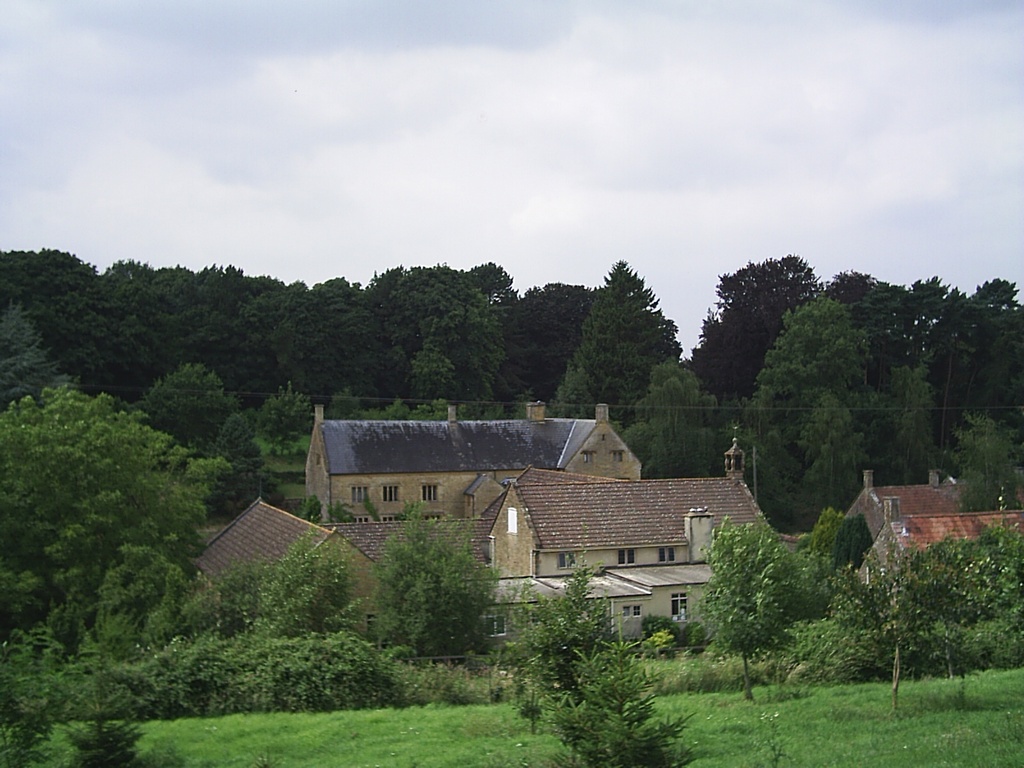
where I was on retreat, is the main UK House of the Community of St Francis, the 1st Order for women. Their website says, "The Community of St Francis is an Anglican Religious Order of sisters living together in community under vows of poverty, chastity and obedience. Following Christ in the way of St Francis, we seek to live a simple life inspired by the Gospel, recognising in all people the image of God who created each of us, accepting all as our brothers and sisters. We offer hospitality and welcome on this basis to groups and individuals, women and men, of any faith or none and all denominations who have respect for our way of life... For individuals we can provide a comfortable, quiet, friendly place to stay on retreat, for a few days ‘away from it all’, somewhere to relax, somewhere to work, somewhere to study, somewhere to pray or somewhere to spend time with God... Sisters are often available to spend time with individuals or groups for retreats, talks, spiritual direction, prayer guidance, or simply to offer a listening ear."

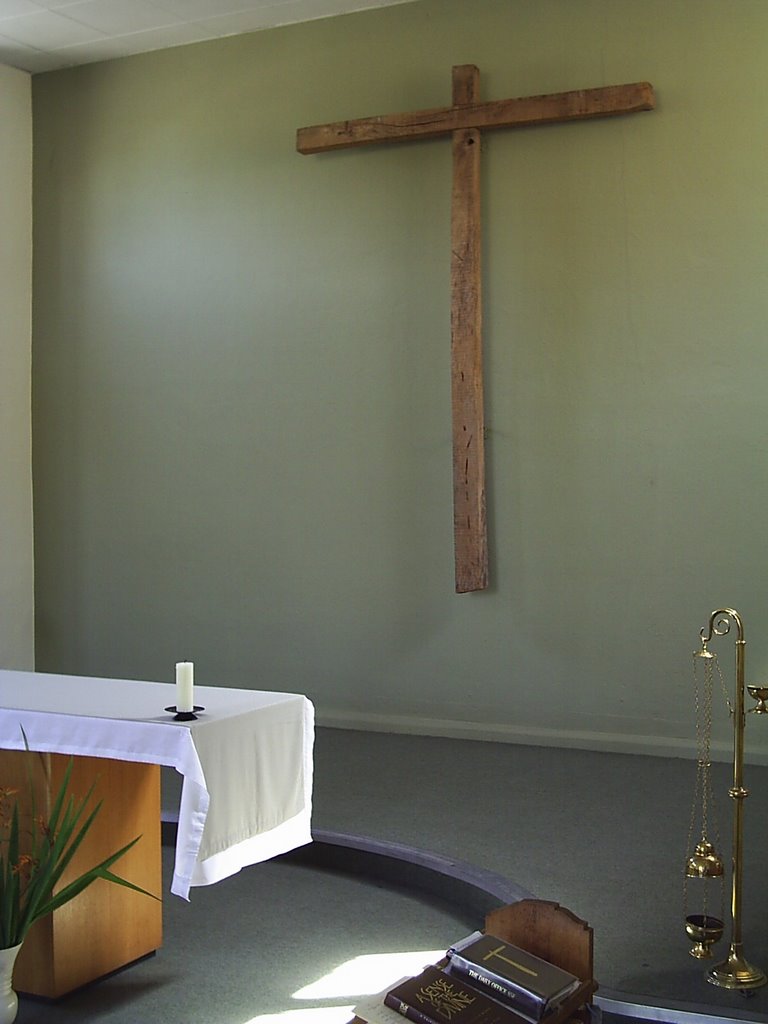
Just thought I'd share a couple of pictures I took to remember the place by... The first one shows the convent nestling in the Somerset countryside, and the second the great Tau Cross in the main chapel, that came to be such a focus for so much of the week...


Thursday, August 03, 2006

That was...

The most extraordinary time. I got home here on Sunday afternoon, but it's taken me till now to put fingers to keyboard to post anything here.

I suppose the enduring thing to come out of last week is the sure knowledge of the immensity, the illimitability, of God's love; and the infinite refuge of the Cross, where God's mercy touches the world of humankind... That, and the clarity and passion with which it is possible to live when those things stand always at the front of all we think and do and desire.

Isaac of Nineveh (also called Isaac the Syrian) the 7th century solitary and contemplative, who lasted 5 months as Bishop before withdrawing again to the wilderness, somehow came to focus the week in a way. You'll remember the extraordinary passage I quoted from him on "What is a compassionate heart?" This provided a sort of key to what God was doing between us, the retreat director and me, over the week. If we are to live in the light of the Cross, and live by its shelter and its sacrifice, then we have to find a way to allow God to make real in our own lives that utterly astonishing statement of Paul's in Colossians 1:17ff:


He [Christ] is the image of the invisible God, the firstborn of all creation; for in him all things in heaven and on earth were created, things visible and invisible, whether thrones or dominions or rulers or powers — all things have been created through him and for him. He himself is before all things, and in him all things hold together. He is the head of the body, the church; he is the beginning, the firstborn from the dead, so that he might come to have first place in everything. For in him all the fullness of God was pleased to dwell, and through him God was pleased to reconcile to himself all things, whether on earth or in heaven, by making peace through the blood of his cross.

Isaac understood this. He wrote:

Let yourself be persecuted, but do not persecute others.
Be crucified, but do not crucify others.
Be slandered, but do not slander others.
Rejoice with those who rejoice, and weep with those who weep: such is the sign of purity.
Suffer with the sick.
Be afflicted with sinners.
Exult with those who repent.
Be the friend of all, but in your spirit remain alone.
Be a partaker of the sufferings of all, but keep your body distant from all.
Rebuke no one, revile no one, not even those who live very wickedly.
Spread your cloak over those who fall into sin, each and every one, and shield them.
And if you cannot take the fault on yourself and accept punishment in their place,
do not destroy their character.


It's extraordinary how often I find St Isaac reminding me of both Francis of Assisi and Julian of Norwich!

Certainly one result of this last week has been to deepen and confirm my Franciscan vocation more and more. I am so grateful to God and St Francis for establishing the Third Order! (For those who are curious, you can read the story here...)

One thing I must relate - after spending 8 days together in silence (apart from an hour a day with our respective retreat directors) the other two long-haul retreatants and I became strangely close, after more than a week of grinning good morning to each other, and hand-signalling "Pass the cornflakes!" On the final morning's breakfast, after the Eucharist, with the Sisters, other retreatants, and assorted guests and visitors, the three of us could hardly stop talking long enough to eat toast and drink coffee! Each one had a remarkable story, and God had forged such a bond of love between us, all without words. Beautiful and strange, the way he works...

Powered by Qumana