Showing posts with label presence of God. Show all posts

Wednesday, January 09, 2019

When we were still powerless...

I have been struck before by the parallel between the Quaker practice of holding someone or something in the Light - being simultaneously and intentionally aware of them, and of the presence of God - and what I have come to call contemplative intercession.

Theophan the Recluse wrote:
Divine action is not something material: it is invisible, inaudible, unexpected, unimaginable, and inexplicable by any analogy taken from this world. Its advent and its working within us are a mystery… Little by little, divine action grants to man increased attention and contrition of the heart in prayer…

The spirit of prayer comes upon man and drives him into the depths of the heart, as if he were taken by the hand and forcibly led from one room to another. The soul is taken captive by an invading force, and is willingly kept within, as long as this overwhelming power of prayer still holds sway over it.

(Quoted in The Art of Prayer: An Orthodox Anthology, ed. Timothy Ware & Chariton of Valamo)
Time and again, recently, I find myself woken in the night by the recollection, or the sudden awareness, of the need, or pain, of someone, human or otherwise. Often these are ones of whom I know very little in a factual sense. I cannot "pray for them" in the conventional sense of making explicit petitions on their behalf to an anthropomorphised conception of God in my own mind - how could I? - but I can keep them close in my heart as I sink into my awareness of the constant steadfast love of God, and of his unfailing presence that sustains all things (Hebrews 1.3). (For me, the Jesus Prayer is enough engagement for what is left of my conscious mind, enough to help keep it out of the way.)

The heart being the place where God's love meets us (Romans 5.5-6) it meets too there the one whom we are holding in our heart. Nothing else seems to be needed. It is the simplest, and yet in my little experience, the hardest and most painful thing. But it is good, and wholesome, and given by God in that place which is so far nearest, most open to his own love as it reaches us by his Holy Spirit.

Tuesday, January 09, 2018

From the Map into the Geography

It is always shocking to meet life where we thought we were alone. ‘Look out!’ we cry, ‘it’s alive.’ And therefore this is the very point at which so many draw back–-I would have done so myself if I could–-and proceed no further with Christianity. An ‘impersonal God’–-well and good. A subjective God of beauty, truth and goodness, inside our own heads–-better still. A formless life-force surging through us, a vast power source that we can tap–-best of all. But God himself, alive, pulling at the other end of the cord, perhaps approaching at an infinite speed, the hunter, king, husband–-that is quite another matter. There comes a moment when the children who have been playing at burglars hush suddenly: was that a real footstep in the hall? There comes a moment when people who have been dabbling in religion (‘Man’s search for God!’) suddenly draw back. Suppose we really found Him? We never meant it to come to that! Worse still, supposing he has found us? 
CS Lewis, Miracles

The odd thing is that some of us, Friends and others, who are caught at one or another of these stages (often at the “inside our heads” stage) feel that they are actually at a more advanced level, as it were, spiritually or intellectually, than those who take what they may call a more “literalistic” approach to faith. But this passage reminds me forcibly of my own first steps on that path.

From childhood I had had the sense of living on the edge of something – there had been moments, and more than moments, when the curtain across that edge grew thin and tattered, and the unimaginable peeped, almost, through into sunlit orchard behind our house, or called in the hollow song of the foghorn, at night across the sea beyond my bedroom window. As I grew up, I alternated between trying to escape all such considerations into the clean certainties of GCE science, and looking – increasingly – for explanations. As I dabbled in phenomenology, and began to read not only Eastern mystical texts, but a few of the Christian mystics as well, I vividly remember thinking, “This is all very well, but I need a system that lets me remain in charge… I don’t like this continual call to surrender. I’m just beginning to find me – I’m not letting go of that!”

It was not for another nearly ten years that events broke through that self-commitment, and I found I had fallen into the hands of the living God. (cf. Hebrews 10.31!) But I was under no illusion then that I had somehow slipped from an enlightened sophistication into some more primitive state – rather I had the feeling that I had blundered from the map into the geography, and the little painted rivers now thundered over their falls and rapids, and on to a sea that was more than capable of absorbing my cherished me without a trace. The mere spray soaked me to the skin…

The reality of faith indeed a matter of life and death: what then? There is an end to ideas and opinions, and to all our words. One day there will be nothing else than that: for all we have treasured will be rotted through with Light. (Matthew 6:19-21; 1 Corinthians 3.15)

“Life is not a matter of creating a special name for ourselves, but of uncovering the name we have always had,” as Richard Rohr writes in his book Immortal Diamond: The search for our true self. And death itself, perhaps, is for that true self the gate to life... 

Saturday, January 16, 2016

An Odd Occupation

Contemplative prayer is an odd occupation. Thomas Merton described it as a sinking down into the depths of one's being, into the "hidden ground of love". In those who find themselves called to contemplative prayer, there appears to be a sort of magnetic pull towards this: not to some kind of personal improvement, a sort of perfected selfhood, but to the Ground of Being itself - to God.

Compared, too, with "utilitarian" concepts of social justice or of evangelism - the greatest numbers of hungry fed, poor clothed, ears filled with the Gospel - the contemplative life seems an unlikely calling. But we must not forget that all through the years of World War II exiled Russian monks (among them Archimandrite Sophrony) prayed in the monasteries and caves of Mount Athos, and during her years in a Soviet labour camp Irina Ratushinskaya wrote poems on bars of soap with the burnt end of a matchstick, committing them to memory before she washed away the evidence.

The closer we find ourselves drawn to God, to the inexhaustible mercy that is at the heart of being itself, in-ness (Eckhart's istigkeit), the more that love comes to fill us, setting gently aside our self-concern, till we come to "[be] with God, putting ourselves in his presence, being hungry and thirsty for him, wanting him, letting heart and mind move towards him; with the needs of the world on our heart" (Michael Ramsey). That is the intercessory dimension of our contemplative prayer, not intercession in the sense of asking for things, but in the sense of being with.

In prayer, time flattens out into presence. It is as though we could stand on a high place watching someone complete a journey on the plain below: we can see the place where their trip began; we can see their destination; and we can see the dot of their vehicle, a tiny model travelling that dusty road across the open land. For them, there is a succession of times: departure; driving; arrival. But for us there is only now, containing the journey whole and present, time realised as space, complete in itself. Within this space that is Mercy itself, all our histories, as Cynthia Bourgeault points out, "past, present and future, all our hopes and dreams, are already contained and, mysteriously, already fulfilled." She goes on:
The great mystics have named this as the heart of the Mercy of God: the intuition that the entire rainbow of times and colours, of past and future, of individual paths through history, is all contained - flows out of and back into - that great white light of the simple loving presence of God. Alpha and Omega, beginning and end. And in that Mercy all our history - our possible pasts and possible futures, our lost loved ones and children never born - is contained and fulfilled in a wholeness of love from which nothing can ever possibly be lost.
To hold such a vision in our hearts, together with those for whom our hearts are simultaneously broken - the poor, the lost, the weary and the sick, the victims and the perpetrators of cruelty, human or otherwise - is surely a calling to be grateful for, even if it is a hidden and a little-known vocation. For me at any rate, it is the best definition of prayer I know.

Tuesday, March 12, 2013

Jacob's Well

“Now [Jesus] had to go through Samaria. So he came to a town in Samaria called Sychar, near the plot of ground Jacob had given to his son Joseph. Jacob’s well was there, and Jesus, tired as he was from the journey, sat down by the well. It was about noon...” (John 4.4-6)

Jacob’s well is a thin place. Even after all these years, with the accretions of centuries, and the Eastern Orthodox monastery of Nablus built over it, the deep well is just as it would have been when Jesus met the unnamed Samaritan woman there over two thousand years ago. To stand there, beside the worn stones of the kerb, and watch as the icy cold, clear water is drawn up by bucket, is a strange experience. For an instant, the poky candlelit crypt seems to split apart, and the sunlit dusty hillside above the town is open again to their words:
‘Sir,’ the woman said, ‘I can see that you are a prophet. Our ancestors worshipped on this mountain, but you Jews claim that the place where we must worship is in Jerusalem.’
‘Woman,’ Jesus replied, ‘believe me, a time is coming when you will worship the Father neither on this mountain nor in Jerusalem. You Samaritans worship what you do not know; we worship what we do know, for salvation is from the Jews. Yet a time is coming and has now come when the true worshippers will worship the Father in the Spirit and in truth, for they are the kind of worshippers the Father seeks. God is spirit, and his worshippers must worship in the Spirit and in truth.’ (John 4.19-24)
The light in the Holy Land is extraordinary. Somehow it is more than just light. I looked through the photographs I took of that day, hoping to find one to illustrate this—but they don’t show the actinic quality that transforms time, threads the instants on a braid of isness, stretches the breath to hold truth between the rise and fall of one’s chest.

“...in the Spirit and in truth.”

Sunday, February 10, 2013

Community in the Spirit...

We know the power of God’s Spirit at work in the lives of people within the community of our meetings. These people may have been drawn into the community by a sudden convincement, a long period of seeking, or have grown up within it from childhood. We also know that we are engaged in a life-long growth into faith, and experience a continuing irruption of grace into our lives which demands and sustains a commitment to a life of discipleship. We recognise this power at work in people of all ages, races and creeds: a transforming power which can issue in lives of joy, humility and service.

The concrete expression of the Holy Spirit is a strange thing, and perhaps lies at the root of all that is meant by the word incarnation. Traditionally the word is used of Christ, who “came down from heaven: by the power of the Holy Spirit he became incarnate from the Virgin Mary, and was made man.” (Nicene Creed) But God’s Spirit indwells us too (Luke 11.13; John 16.12ff) and works through us (Mark 13.11; Galatians 5.22-25); and it is the Spirit who fills us in worship, and changes us.
 
In just the short time I’ve been attending my local Quaker Meeting, the sense of stepping into a community has been palpable. I’ve encountered all kinds of Christian community over the years, of different sizes and degrees of intentionality; yet Quaker community, as I’ve begun to experience it, is something different again.

In the Meeting, under the spiritual leading that arises out of shared silence, the Spirit can weave that fabric called community in an extraordinarily concrete and palpable way.

George Gorman wrote:
One of the unexpected things I have learnt in my life as a Quaker is that religion is basically about relationships between people. This was an unexpected discovery, because I had been brought up to believe that religion was essentially about our relationship with God.

If we are sensitive, we find that everything that happens to us, good or bad, can help us to build a vision of the meaning of life. We can be helped to be sensitive by reading the Bible and being open to experience of nature, music, books, painting, sport or whatever our particular interest may be. It is in and through all things that we hear God speaking to us. But I do not think I am alone in my certainty that it's in my relationships with people that the deepest religious truths are most vividly disclosed.
 
But Quaker community is known most clearly and distinctively in silence, and it is out of that silence that all its works of peace and justice flow. The French Quaker Pierre Lacout wrote:
In silence which is active, the Inner Light begins to glow – a tiny spark. For the flame to be kindled and to grow, subtle argument and the clamour of our emotions must be stilled. It is by an attention full of love that we enable the Inner Light to blaze and illuminate our dwelling and to make of our whole being a source from which this Light may shine out.

Words must be purified in a redemptive silence if they are to bear the message of peace. The right to speak is a call to the duty of listening. Speech has no meaning unless there are attentive minds and silent hearts. Silence is the welcoming acceptance of the other. The word born of silence must be received in silence.

It’s into that silence that I’m increasingly drawn, sinking into it as into a long-lost home. I keep asking myself why it's taken so long...

Thursday, June 14, 2012

Asleep in the Mercy…

Very often the word “awakening” is used to describe the ways of God in the heart of his people (e.g. Timothy Jones’ Awake my Soul or Cynthia Bourgeault’s Centring Prayer and Inner Awakening) and of course in many ways this is a good image. God does, by his grace, wake us from the half-conscious life we live in the world, caught among images and the desire for images, living in a reality that is far from real, but a kind of user interface with reality—for, as Eliot said, “human kind / Cannot bear very much reality.”

In a recent article in Church Times, Tony Horsfall (the quote is from his recent book Rhythms of Grace: Finding Intimacy with God) wrote, “We live in a God-bathed world. There is no place where God is not, although sometimes we may be asleep in his presence.” I know what he means, and of course we have all known times like this, when we realise we have spent the entire space of the Eucharistic prayer at Mass thinking about HTML5, or the need to weed the garden. But truly being asleep, sound asleep, in the presence of God, falling asleep in the conscious presence of God, consciously longing for the mercy of Christ, and letting oneself slip into sleep as into that mercy—that is something different, and I would want to be clear about the distinction…

I seem to be collecting a little cache of writings about this, and I don’t want to repeat myself here, so do start with this Lent’s post The Shores of Perception, which links back to the earlier posts—or else just click “dreams” in the tag cloud in the sidebar. There is so much more to explore here, and yet by its very essence it is hard to capture, sitting here at a keyboard. But I will try, over the next few weeks I will try as best I can…

Saturday, June 02, 2012

Iona

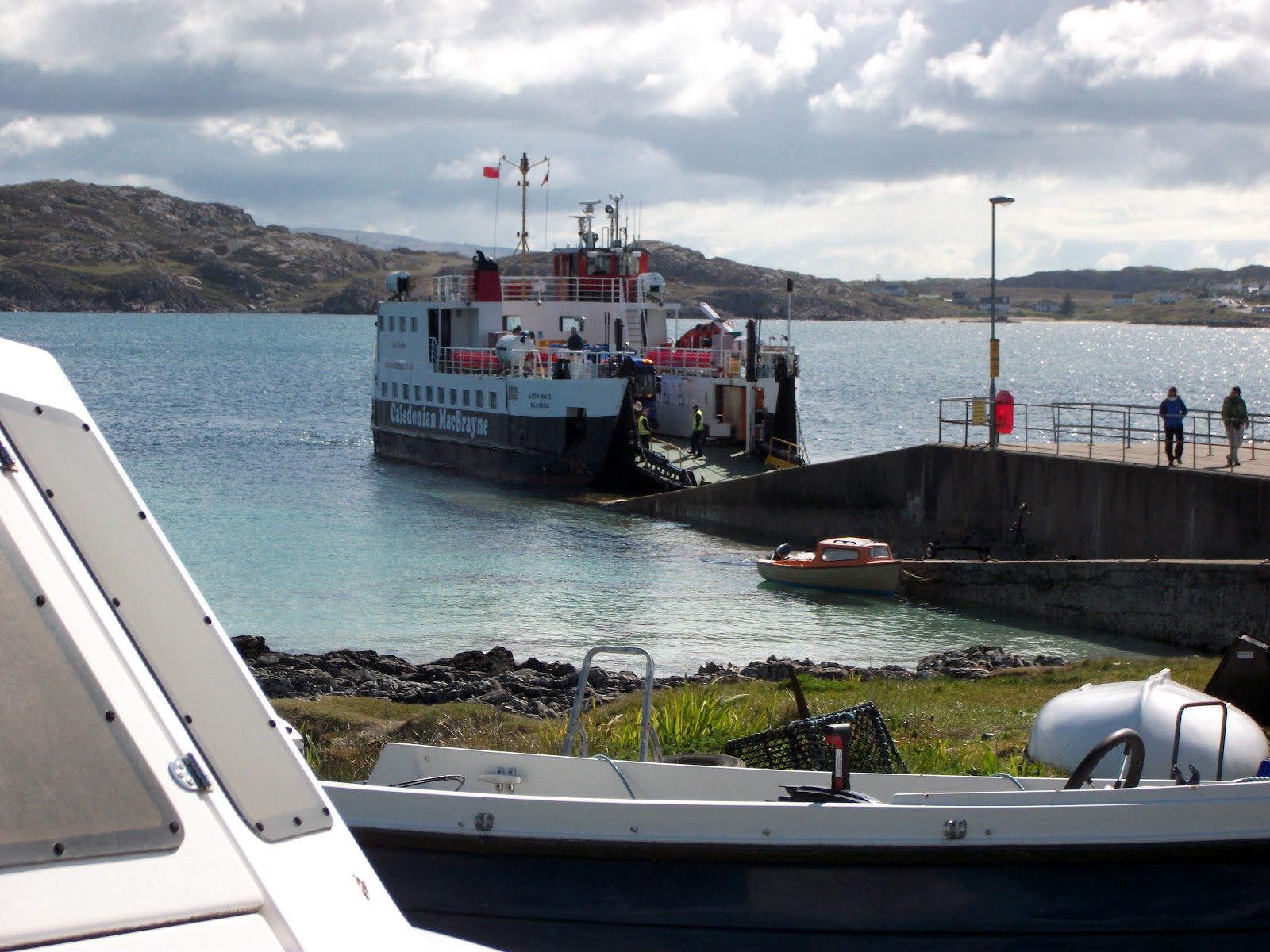
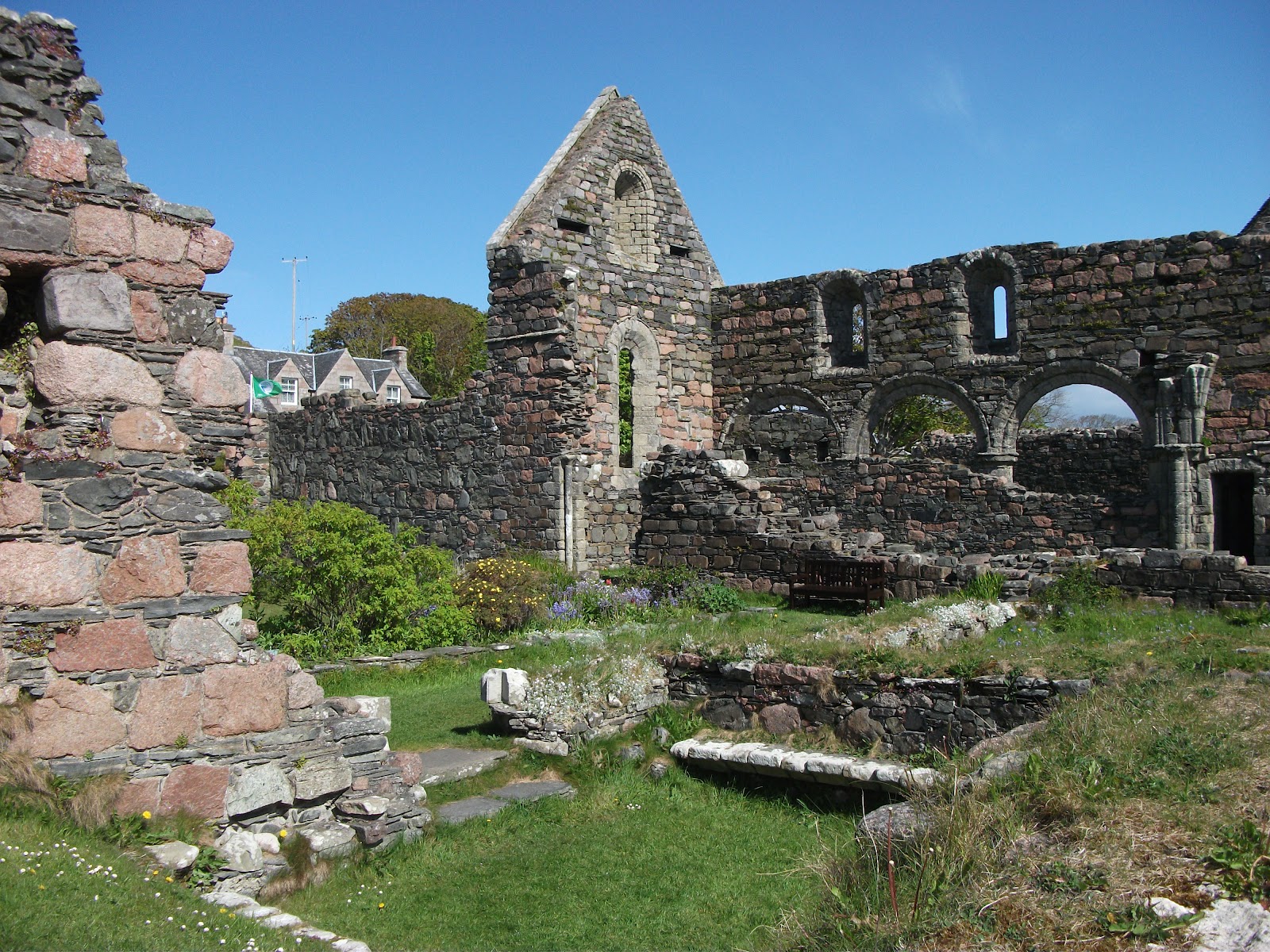
I've been sorting out some pictures...

Walking to the ferry at Fionnphort, on the Isle of Mull


Landed!


Baile Mor, Iona's village


The ruins of the old Augustinian convent


An Iona bee on the ivy-leaved toadflax that grows everywhere


St Mary's Abbey


The High Cross at the Abbey


The Cloisters


Inside the Abbey Church


Today's reading is John 15.18-21...


The High Altar


Ferns in the chancel wall!


The font - the legs are of Iona marble


Gardens in Baile Mor


Bishop's House, the Anglican retreat house


An old cat in the sun...


The post box

Baile Mor from the beach, with the Abbey behind

Thursday, October 27, 2011

Forgiveness…

Forgiveness is the answer to the child's dream of a miracle by which what is broken is made whole again, what is soiled is again made clean. The dream explains why we need to be forgiven, and why we must forgive. In the presence of God, nothing stands between God and us--we are forgiven. But we cannot feel God's presence if anything is allowed to stand between ourselves and others.

Dag Hammarskjold: Journal 1956

Forgive us our sins, as we forgive those
who sin against us…

I don’t know of a clearer or more beautiful explanation of how this works than Dag Hammarskjold’s words here. No wagging fingers, no hard bargains; just the truth…

Monday, August 02, 2010

A vast and fruitful loneliness…

Life may be brimming over with experiences, but somewhere, deep inside, all of us carry a vast and fruitful loneliness wherever we go. And sometimes the most important thing in a whole day is the rest we take between two deep breaths, or the turning inward in prayer for five short minutes.

Etty Hillesum, An Interrupted Life: the Journal of a Young Jewish Woman, 1941-1943, with thanks to inward/outward

The great mystery of the incarnation is that God became human in Jesus so that all human flesh could be clothed with divine life. Our lives are fragile and destined to death. But since God, through Jesus, shared in our fragile and mortal lives, death no longer has the final word. Life has become victorious. Paul writes: “And after this perishable nature has put on imperishability and this mortal nature has put on immortality, then will the words of scripture come true: ‘Death is swallowed up in victory. Death, where is your victory? Death, where is your sting?’” (1 Corinthians 15:54). Jesus has taken away the fatality of our existence and given our lives eternal value.

Henri Nouwen, from Bread for the Journey

I seem to be writing a lot about solitude and loneliness at the moment. I’m truly not sure quite why. I do know, though, that for me these words are close to the centre of where I’m living from at the moment.

One of yesterday’s lectionary readings was the following, from Paul’s letter to the Colossians: “So if you have been raised with Christ, seek the things that are above, where Christ is, seated at the right hand of God. Set your minds on things that are above, not on things that are on earth, for you have died, and your life is hidden with Christ in God. When Christ who is your life is revealed, then you also will be revealed with him in glory.” (Colossians 3:1-4)

Those words, “your life is hidden with Christ in God”, just fill me so strongly with that longing, that loneliness that is somehow the very presence of God, that it’s as though he were there, in the very words themselves. Hardly surprising, perhaps, given Jesus’ own prayer for us,

“I ask not only on behalf of these, but also on behalf of those who will believe in me through their word, that they may all be one. As you, Father, are in me and I am in you, may they also be in us, so that the world may believe that you have sent me. The glory that you have given me I have given them, so that they may be one, as we are one, I in them and you in me, that they may become completely one, so that the world may know that you have sent me and have loved them even as you have loved me.” (John 17:20-23)